Losing a tooth is more than just a cosmetic issue. It affects how you eat, how you speak, and how you feel every day. Traditional dental implants have helped many people — but they don’t work for everyone. If you have low bone density or have been told you are not a candidate for regular implants, there is still a powerful solution: the Basal Implant.
What Is a Basal Implant?
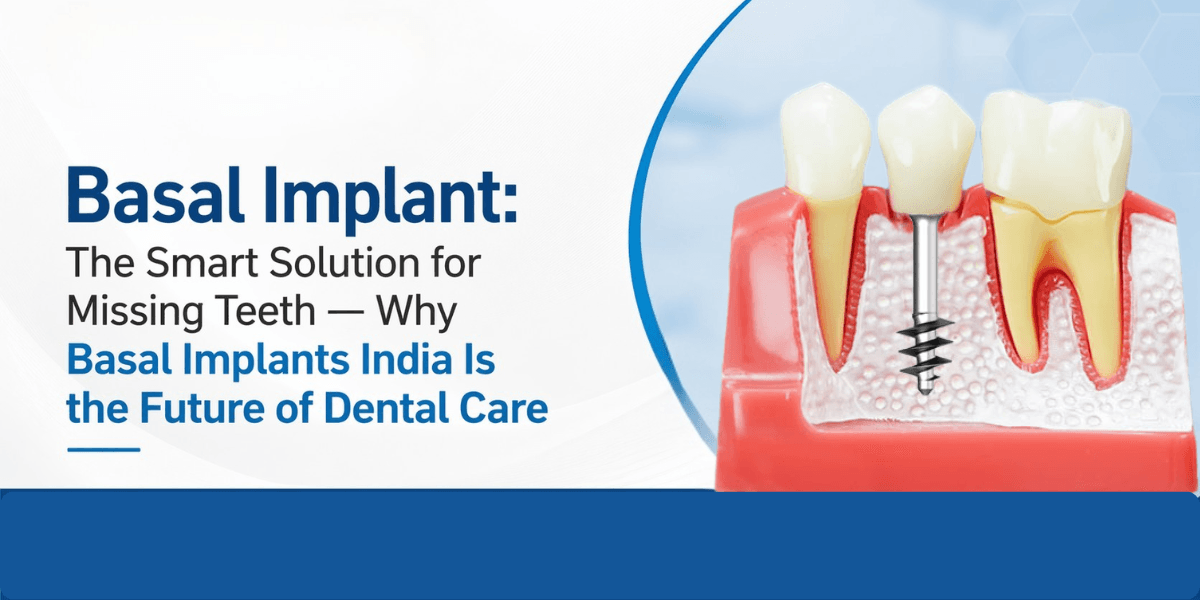
A basal implant is a modern type of dental implant that is placed in the deeper, stronger layer of the jawbone called the basal or cortical bone. Unlike traditional implants that rely on the upper layer of the jaw (alveolar bone), basal implant go deeper — into bone that is dense, strong, and does not shrink over time.
This is what makes basal implants so special. Even patients who have experienced severe bone loss due to gum disease or long-term tooth loss can benefit from this treatment. The deep cortical bone is present in almost everyone, making basal implants a truly universal dental solution.
Who Can Get Basal Implants?
One of the biggest advantages of choosing basal implants in India is how widely they can be used. These implants are suitable for
- Patients with low bone density or bone loss
- Diabetics and smokers, who are often not recommended for regular implants
- Patients with severe gum disease
- Those who want to avoid complex bone grafting procedures
- Anyone looking for a faster, more efficient dental restoration
Key Benefits of Basal Implants
- Teeth in 72 Hours With basal implants, a fixed dental prosthesis can be attached within just 72 hours of surgery. Traditional implants often require months of healing and sometimes a full year when bone grafting is needed. Basal implants dramatically cut down on treatment time.
- Single-Piece Design Basal implant are built as one solid piece — the implant body and the abutment are fused together. This removes the risk of parts loosening or getting infected at connection points, a common issue with two- or three-piece traditional implants.
- No Bone Grafting Required Because basal implant use the deep cortical bone, patients can skip the painful and time-consuming bone augmentation process. This means fewer surgeries, faster recovery, and better overall experience.
- Minimally Invasive Procedure The placement of a basal implant is often done using a flapless technique — meaning minimal cutting of the gum tissue and bone. This reduces pain, swelling, and healing time significantly.
- Works for Complex Cases Acute dental conditions, failing teeth, and severely damaged gums can all be treated with basal implant in a single visit. Compromised teeth are removed and implants are placed in the same session.
Why Choose Basal Implants India at Simpladent?
Simpladent India is a trusted name in advanced implantology. Their team uses certified, high-quality basal implant systems and follows globally recognized corticobasal® implantology protocols. Doctors across India rely on Simpladent implants because of their superior design, clinical performance, and proven outcomes.
Simpladent has trained hundreds of dental professionals through its basal implant courses and diploma programs. This commitment to quality education means patients get treated by well-trained specialists who know exactly how to deliver the best results.
The Bottom Line
Basal implants represent the next generation of dental restoration. They are safe, effective, fast, and suitable for a far wider range of patients than conventional implants. If you or someone you know has been told that implants are not possible due to bone loss or health conditions, it is time to explore basal implants India through Simpladent.
A healthy, confident smile is possible — no matter the condition of your jawbone.To learn more or to get in touch with the Simpladent team, visit www.simpladent.in
Keep yourself updated following our Social Page for the latest news and information.