The Posterior Maxilla Remains The Hardest Region to Restore
Severe pneumatisation of the sinus, thin residual crestal bone and poor D3–D4 density make conventional crestal fixtures unpredictable in the posterior maxilla. Extended-length implants that engage bone outside the alveolar envelope offer a different planning route — one where anchorage is sought in cortical structures rather than in bone that has already resorbed.
Where Pterygoid Implants Engage
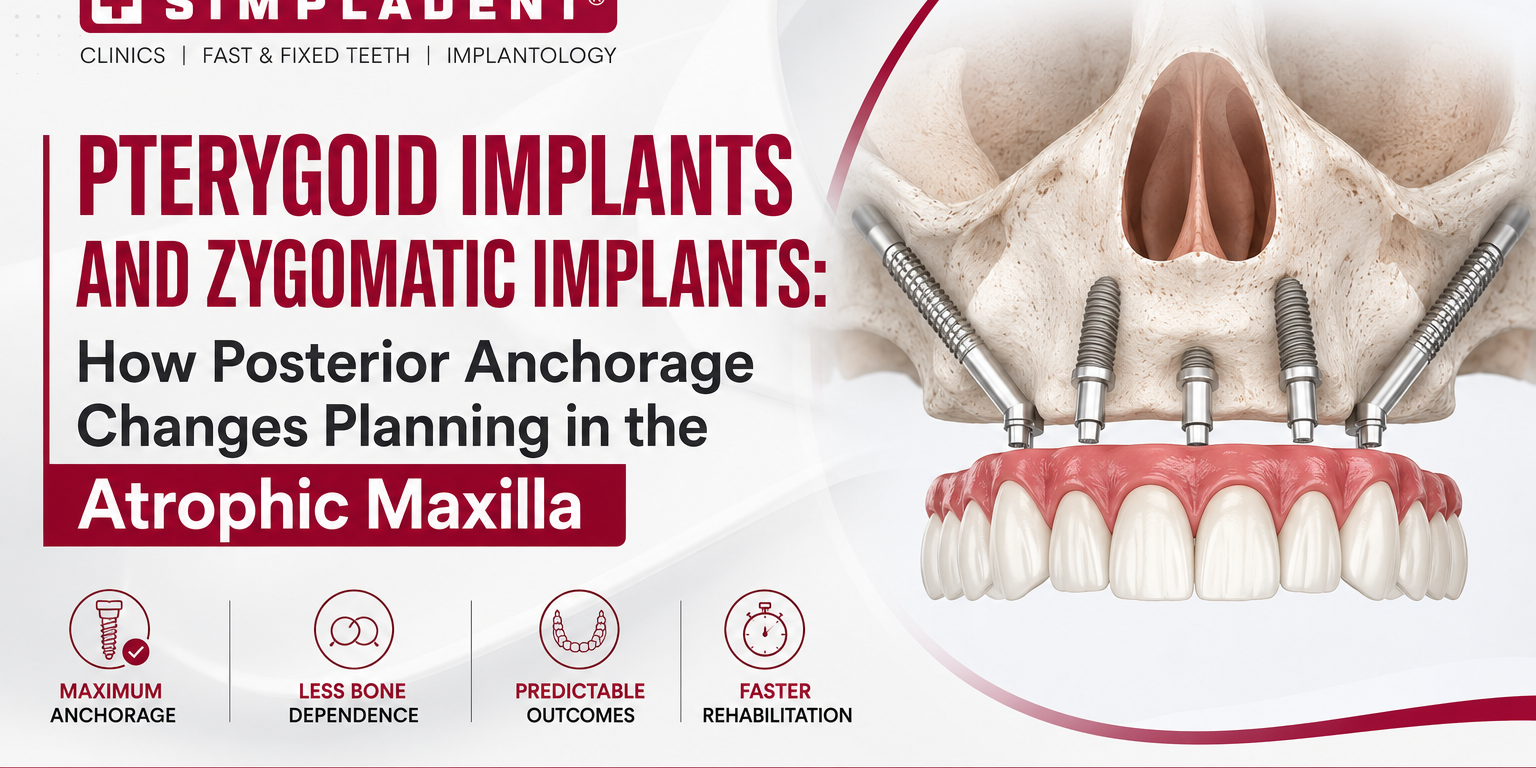
Pterygoid implants are placed through the tuberosity region and angled to engage the pterygoid plate and surrounding cortical bone. Because the anchorage lies posterior to the sinus, the fixture can bypass the pneumatised area rather than depend on it. Clinically, the value is distal support: a posterior abutment that reduces or removes the need for a long cantilever in a full-arch prosthesis. Access, angulation and proximity to the maxillary artery and pterygoid venous plexus make the placement technique-sensitive, and it belongs with operators trained specifically in extended-anchorage protocols.
Where Zygomatic Implants Engage
Zygomatic Implants take anchorage in the body of the zygoma. They are usually discussed for the severely atrophic maxilla where crestal bone is insufficient across the arch, and they are frequently planned alongside anterior fixtures or pterygoid implants to distribute load across the arch.
Grafting: A Planning Decision, Not a Slogan
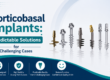
Advanced protocols such as Corticobasal® implants and extended-anchorage fixtures may allow patients with reduced bone support to be evaluated without extensive grafting, subject to diagnostic imaging. That is a case-by-case finding from CBCT and clinical assessment — not a universal outcome. Sinus lift and augmentation remain valid options, and the decision should follow the diagnosis rather than the marketing.
Choosing The Best Dental Implants for a Given Case
There is no single “best” implant system. In practice, the best dental implants for a case are the ones whose anchorage strategy matches the available cortical bone, the planned prosthesis and the patient’s systemic status. Selection criteria worth documenting in every case file: residual bone volume and density, sinus and nerve anatomy, occlusal scheme, opposing dentition, hygiene access and maintenance capacity. Where immediate loading is considered, splinting and primary stability determine feasibility — results and timelines vary, and confirmation follows clinical and radiographic evaluation.
For Clinicians Building This Skill Set
Extended-anchorage implantology is learned under supervision, on planned cases, with structured radiographic review. Simpladent India runs Corticobasal® implantology training under the International Implant Foundation (IF), Munich, curriculum, led by IF teacher Dr. Vivek Gaur.
Keep yourself updated following our Social Page for the latest news and information.