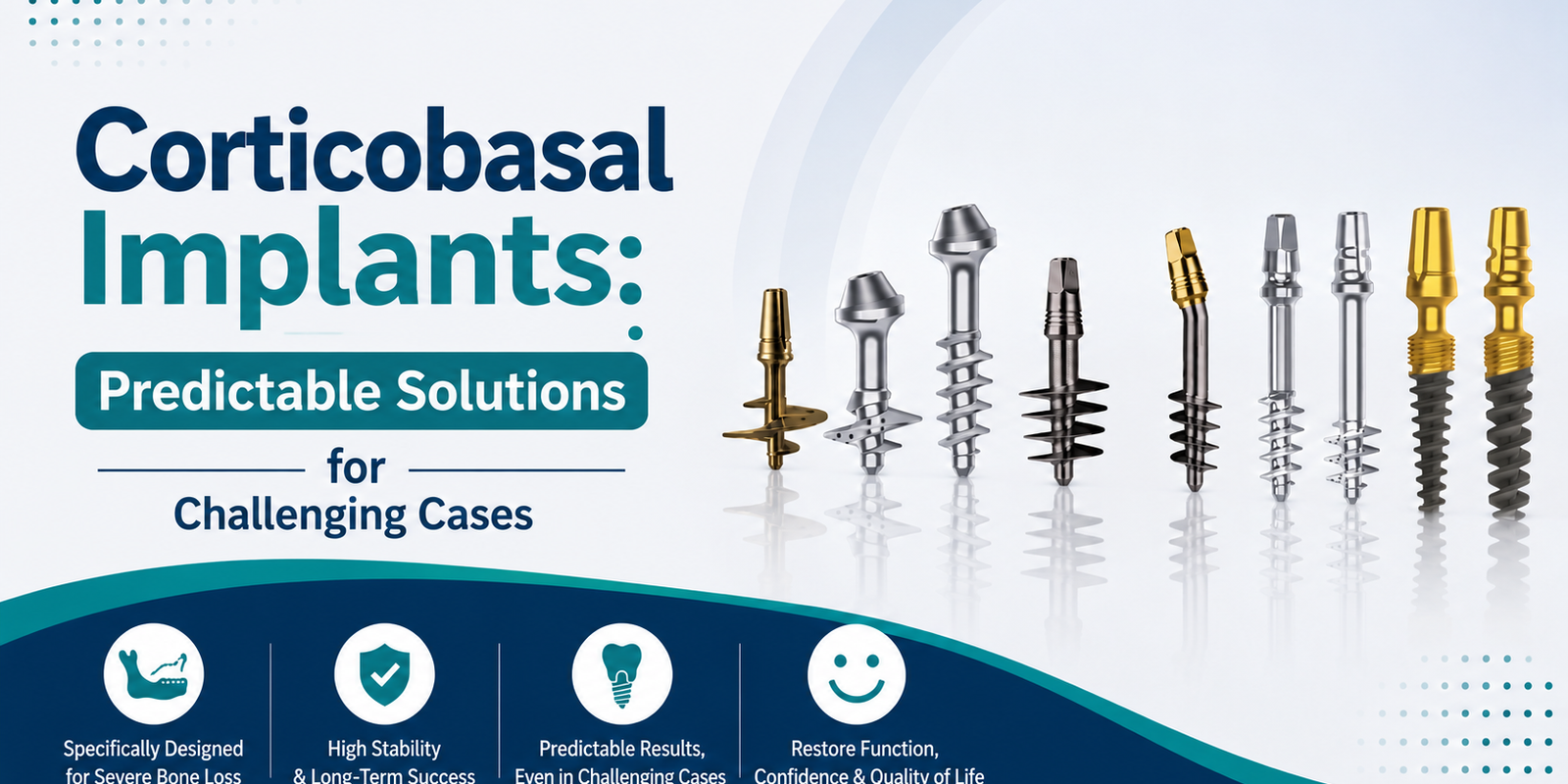
Best Corticobasal Implants Dental implants have become the standard of care for replacing missing teeth, offering patients a fixed, long-term solution that closely mimics natural tooth function. However, the success of traditional implant protocols relies heavily on the quality and quantity of available bone. In cases of severe bone resorption, poor bone density, or failed previous implants, achieving stable osseointegration can be challenging, often requiring extensive bone grafting procedures.
Corticobasal implants, such as the Strategic Implant® system, offer a predictable solution for these complex cases. By engaging the cortical bone, which is denser and more resistant to resorption than trabecular bone, corticobasal implants can achieve high primary stability even in minimum bone volume. This innovative approach allows patients who were previously not candidates for conventional implants to benefit from a fixed, stable dentition.
The principles of corticobasal implantology are based on the strategic engagement of the second or third cortical, often using longer implants that can reach beyond the compromised bone areas. This cortical anchorage provides the necessary stability for immediate loading protocols, enabling patients to receive a functional prosthesis within a short timeframe. However, careful case selection and thorough diagnostic evaluation remain crucial to ensure the best outcomes.
At Simpladent India, our team of experienced implantologists led by Dr. Vivek Gaur specializes in the Strategic Implant® protocol for advanced cases. As an authorized training center for the International Implant Foundation (IF) in Munich, Germany, we are committed to providing evidence-based treatment options that leverage the benefits of cortical anchorage.
Our approach begins with a comprehensive assessment, including 3D imaging, to evaluate the available bone volume and density. This allows precise treatment planning, customizing implant selection and positioning to engage the cortical bone optimally. Immediate loading is planned wherever possible, allowing faster restoration of esthetics and function.
Corticobasal implants significantly expand the range of cases that can be successfully treated, including:
Severely atrophic jaws with reduced bone height and width
Poor bone density, as often seen in elderly or osteoporotic patients
Failed implants needing replacement in compromised bone
Patients seeking a graftless solution to minimize surgical sites
Cases requiring immediate loading for faster restoration of function
While Corticobasal Implants are not indicated for every situation, they represent a valuable tool in the implantologist’s armamentarium, bringing hope to many patients who were earlier denied the benefits of implant therapy. As more clinicians embrace these concepts globally, a broader population stands to benefit from these advancements in implantology.
Disclaimer: The information provided here is for general awareness only. Suitability for dental implants, including the choice of implant system and protocol, requires a thorough clinical evaluation by a qualified implantologist.
Frequently Asked Questions
How do corticobasal implants differ from conventional implants?
Corticobasal implants are designed to achieve anchorage in the cortical bone, even in areas of compromised bone volume. They often use longer implants and specialized designs to engage the second or third cortical, providing high primary stability. Conventional implants primarily rely on trabecular bone for osseointegration and require more bone volume.
Who is a candidate for corticobasal implants?
Corticobasal implants are particularly indicated in cases of severe bone resorption, poor bone quality, failed implants, or when patients prefer a graftless approach. However, a thorough clinical and radiographic evaluation is necessary to determine individual suitability and plan the optimal treatment approach.
What is the success rate of corticobasal implants?
When used in properly selected cases and following established surgical and prosthetic protocols, corticobasal implants have shown high success rates comparable to conventional implants. Long-term studies have documented their efficacy in treating patients with severely compromised bone conditions.
How long does treatment with corticobasal implants take?
One of the advantages of corticobasal implants is the possibility of immediate loading. In suitable cases, a functional prosthesis can be delivered within a short period after implant placement. However, the exact treatment timeline depends on individual factors evaluated during the planning phase.
Keep yourself updated following our Social Page for the latest news and information.